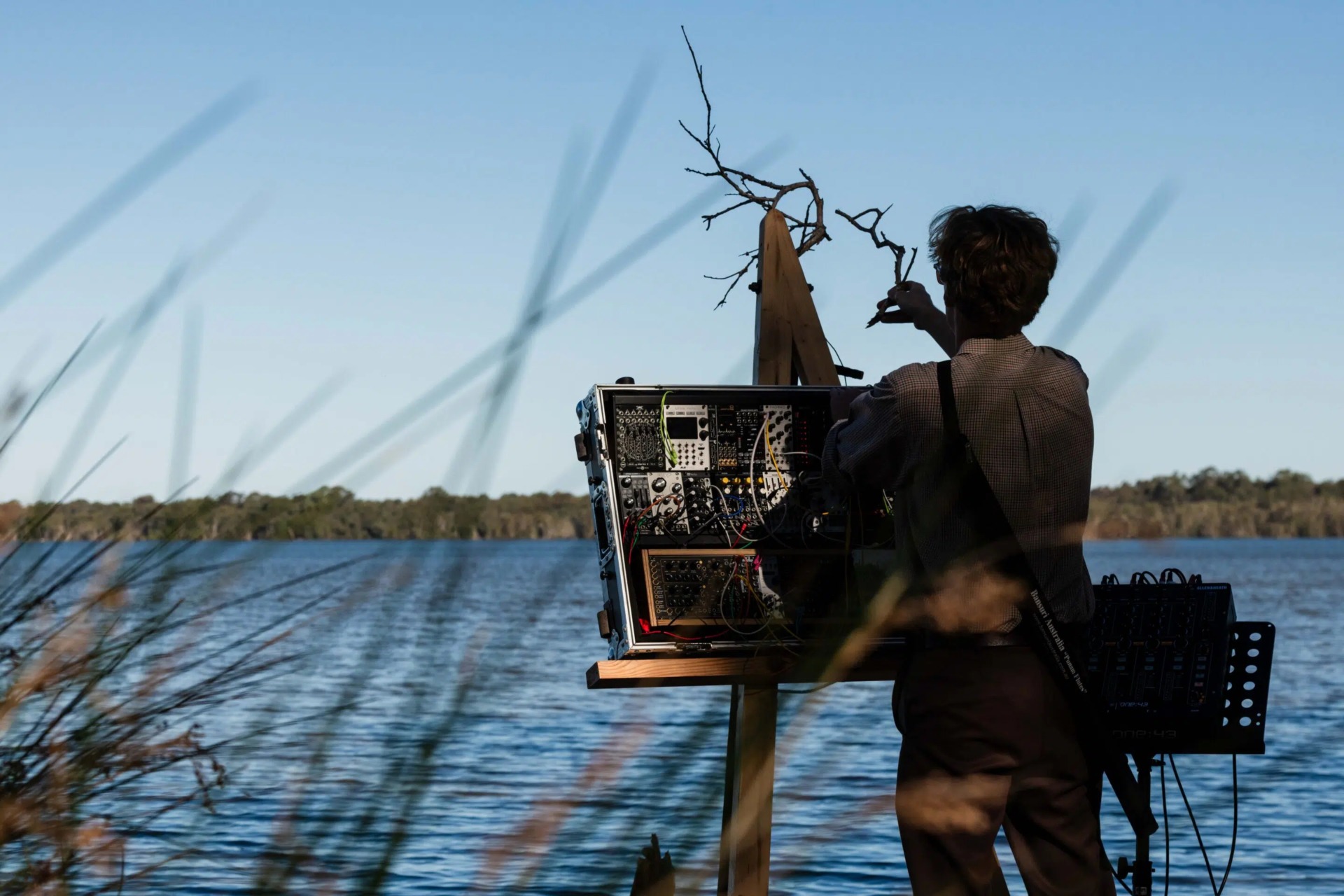
Finley Wegener, Floating Land 2025, Photo by Warwick Gow
Call for Contributions: Acoustic Ecology Futures (AER)
Call for Contributions: Acoustic Ecology Futures
We are excited to invite submissions for the second volume of Acoustic Ecology Review, themed “Acoustic Ecology Futures.” This edition seeks to explore the vitality and evolution of acoustic ecology as it continues to mature and expand in interdisciplinary contexts.
As we navigate unprecedented environmental challenges and cultural transformations, acoustic ecology has much to offer the world. This edition invites contributors to explore future possibilities and current perspectives in the field, showcasing leading research, emerging voices, innovative methodologies, and creative practice that reimagine our acoustic relationships with place, culture, ecology, and community.
We welcome submissions that demonstrate how acoustic ecology is responding to contemporary concerns through rigorous scholarship, experimental practice, and engaged activism. How are we learning to listen differently? What new frameworks, tools, and approaches are emerging? How can acoustic ecology contribute to environmental justice, habitat protection, cultural sustainability, and pedagogical innovation?
While we welcome diverse contributions that speak to the future of acoustic ecology, submissions may address (but are not limited to) the following themes:
Ethical Futures in Sound Practice
-
Non-extractivist approaches to field recording and sonic engagement
-
Collaborative practices with more-than-human worlds
-
Decolonizing methodologies in acoustic ecology
Transformative Listening
-
How positionality and reflexivity shape our listening practices
-
Feminist, queer, and intersectional frameworks for soundscape research
-
Reimagining sonic relationships with place and ecology
Ecologies Under Pressure
-
Climate change and evolving acoustic environments
-
Innovative frameworks for addressing ecologically-threatening noise
-
Acoustic ecology’s contribution to habitat protection and environmental policy
-
Multispecies listening and more-than-human soundscapes
Pedagogies for Change
-
Creative approaches to teaching listening and sound awareness
-
Environmental education and youth engagement through acoustic ecology
-
Community-based sonic activism and collective listening actions
Emergent Practices
-
Technological innovations shaping acoustic ecology research
-
Urban soundscape futures and design interventions
-
Artist-researcher collaborations and experimental methods
-
Indigenous knowledge systems and acoustic ecology
-
Multispecies perspectives in sonic practice and research
Submission Formats
AER embraces the multisensory nature of acoustic ecology research by accepting submissions in multiple formats. We encourage contributors to choose the format that best serves their research and creative aims.
Text-Based Articles
Short Articles (1,500–3,000 words) Suitable for focused research reports, case studies, reflections on practice, reviews, or provocations that engage with key debates in the field.
Long Articles (3,000–5,000 words) Suitable for comprehensive research papers, theoretical explorations, extensive case studies, or critical analyses requiring deeper engagement with literature and evidence.
All text submissions should include:
-
An abstract of 200–300 words
-
4–6 keywords
-
Author biography (50–100 words per author)
-
References in APA format
Audio Papers (15–20 minutes)
Audio Papers offer an innovative format for presenting research through sound. This format is particularly suited to practice-based research, soundscape documentation, sonic ethnography, or creative-critical work where the auditory medium is essential to the argument or experience.
Audio Papers should include:
-
A 300-word written abstract outlining the research contribution
-
Credits and technical information
-
A brief author biography (50–100 words per author)
Video and Creative Works (variable length)
We welcome video essays, documented performances, installations, creative projects, and other audio-visual works that contribute to acoustic ecology knowledge and practice.
All video and creative submissions must include:
-
A 300-word written abstract outlining the research contribution and context of the work
-
Technical specifications and credits
-
A brief author biography (50–100 words per author)
Submission Guidelines
All submissions will undergo double-blind peer review.
Contributors should ensure their work does not contain identifying information in the main document or file.
How to Submit: Prior to full submissions, we are calling for Expressions of Interest, please use the following link to complete your EOI (which requires a 200-300 word abstract submission), EOI Link
Submission Deadline: EOI Deadline May 15, 2026
Why Publish with AER?
-
Open Access: All articles are published with DOIs and made freely available to a global audience
-
Multimodal Publishing: Unique opportunity to publish audio, video, and creative works alongside traditional text
-
International Reach: Connect with the global WFAE community and sound studies scholars and creative practitioners
-
Inclusive Platform: Committed to amplifying diverse voices and perspectives in acoustic ecology
-
Rigorous Peer Review: Ensuring scholarly quality while supporting innovative and experimental work
Expression of Interest (EOI)
Submit