2026 Online Octophonic Course in Soundscape Composition
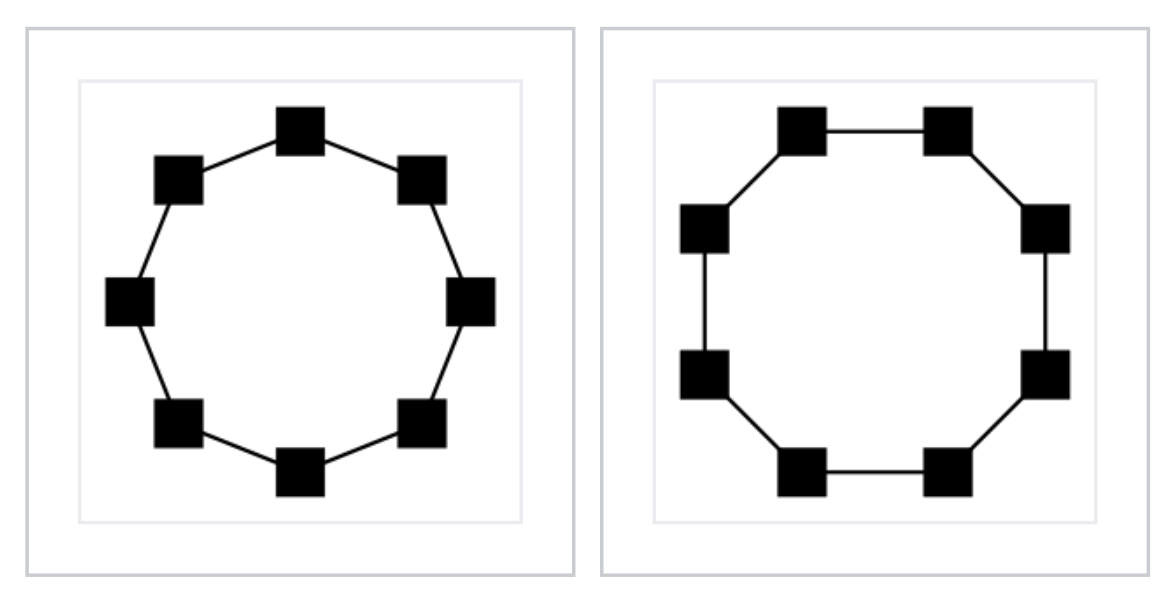
I would like to invite individuals who have access to an 8-channel sound system, along with teaching studios with the same format, to participate in my upcoming Special Topics course in Soundscape Composition this coming term, from January to April 2026.
The course will start Wednesday Jan. 7 and go through to April 1, with a weekly two and a half hour Zoom meeting starting at 10:00 Pacific time, which translates to 8 hours later in the UK/Portugal and 9 hours later in Central Europe. There will be a two week break in February (Feb. 11 & 18), so 11 meetings in total in which I will survey the theory, history and emerging practice of soundscape composition. There is no course fee.
I regard the octophonic component as essential to understanding the potential of studio-based soundscape composition, and although the webinars will feature many stereo examples, I intend to play one or more 8-channel pieces each week. How that will work online is that each week, I will send out a download link for the files involved, and then they will be played at the appropriate time during the following webinar in each location simultaneously on your own system, with a real-time Spectrogram display from my studio on the Zoom monitor. A stereo file will also be available for download.
So, in summary, I am prepared to host and conduct a weekly webinar over 11 weeks, sometimes including guest composers. I will also prepare a package of supplementary readings related to soundscape composition that can also be easily downloaded in advance. In addition, the full resources of the WSP Database will be made available.
In the case of participating studios, I will leave it entirely up to them as to who can take part in their studio, that is, whether they are treated as auditors or credit students and under what requirements. For individuals who have their own 8-channel access, they can join the Zoom meetings individually, and receive their own copies of the readings and soundfiles.
Those individuals who do not have multi-channel access may want to wait for the next online Tutorial course starting in May that will depend only on stereo sound examples. However, those wishing to audit this course just in stereo will be welcomed, but those wanting academic credit for the course need to arrange this with your home institution.
For those in the Pacific region and its time zones, again this year, I have arranged a parallel version of the course, hosted by Jesse Budel from Australia who will present the same topics with my recorded audio and visual material. As a freelance individual, he will need to charge a fee for this service. Those interested should contact him directly at: budeljesse@gmail.com
I have a provisional course outline with most of the specifics which I will send to anyone who is interested.
Looking forward to your response
Barry Truax (truax@sfu.ca)
Professor Emeritus, Simon Fraser University
Here’s some of the reactions to the previous offerings:
I am enjoying the course tremendously, from the readings to your lectures (last week featured the BEST explanation of convolution ever, and that pdf you sent is wonderfully clear!) and of course the work. I have been listening in stereo as well as in multichannel sound; the differences have been profoundly instructive in ways too numerous to detail.
I would like to take this opportunity to thank you once again for your truly inspiring course. I learned so much, discovered many new composers (for me) and am now very motivated to dare to compose small 8-channel projects myself or in a team. Your course will certainly resonate with me for a long time.
This was such a wonderful weekly sonic treat. Thanks so much for your knowledge and aesthetic. I wish this weekly appointment could go on indefinitely, loved every minute of it!
The broad historical, theoretical, technical, and analytical purview of the course makes it an invaluable experience for anyone who composes with field recordings.
Thank you so much for all your sharing in this format. It has been amazing to hear from you on the lineage of experiences and ideas than have become so widespread and part of a culture that has opened up what I think as a new space for sound and music research and artistic practices.
I would like to thank you for offering this Special Topics seminar and for allowing me to attend. It was very informative on the techniques, the aesthetics, and a pleasure to listen to all the multichannel pieces chosen with taste. I am particularly impressed with the level of detailed documentation on your compositions.
It’s been such an illuminating, new way of thinking about composition for me. I loved learning about the historical context of the genre as it evolved out of the World Soundscape Project. Also, thank you so much for sharing your documentation and production scores detailing how you created your pieces. It was so inspiring to study and learn about your approach and workflow. Thanks so much for always creating an open, inclusive and welcoming environment for everyone. I appreciate that so very much! And for bringing up important and underrepresented topics such as gender issues, cultural appropriation, and homoeroticism. I haven’t encountered any music course in my experience that considered any of these important subjects.